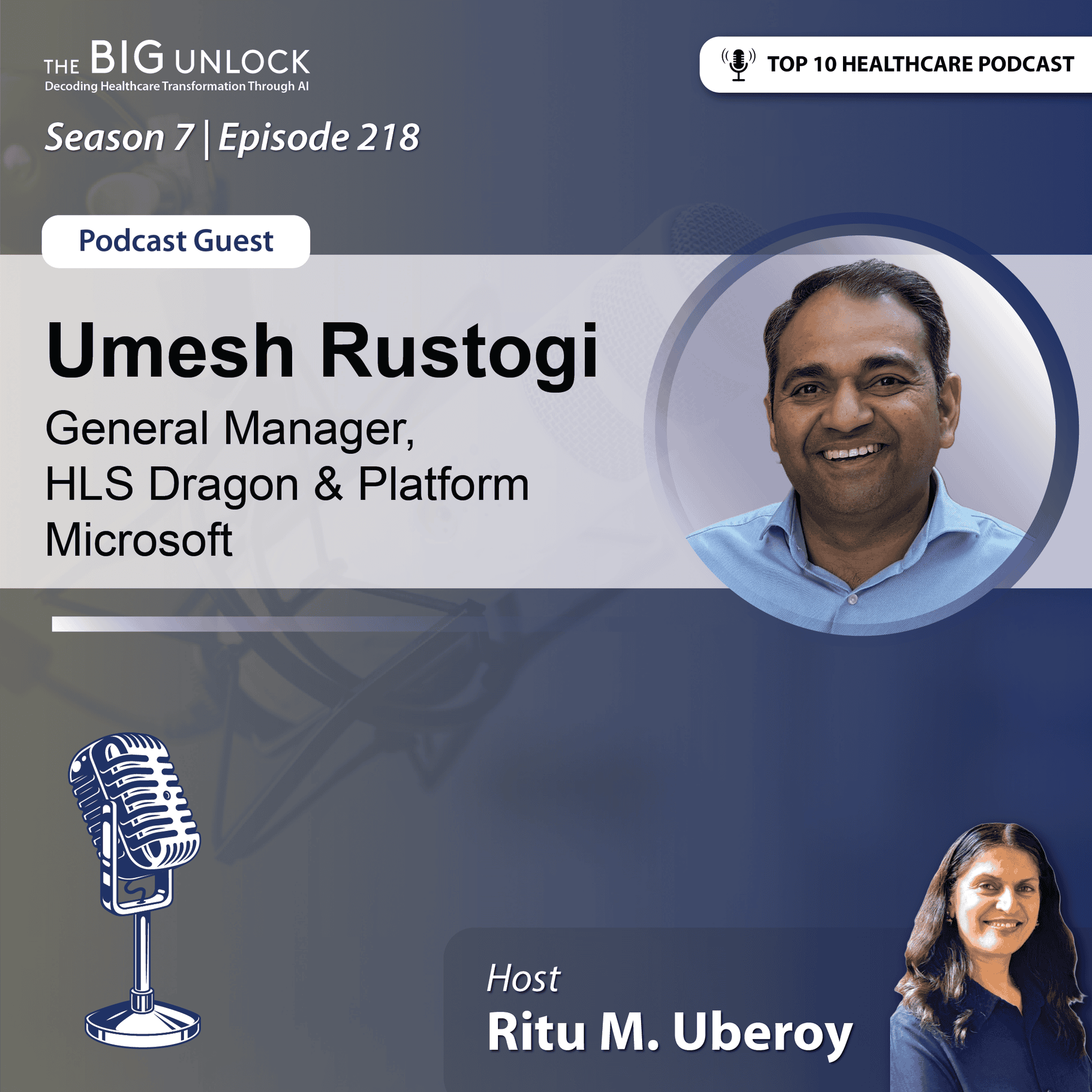
In this episode, Umesh Rustogi, General Manager, Healthcare & Life Sciences Dragon & Platform at Microsoft, explains that meaningful AI outcomes depend on combining unified multimodal data foundations with clinician-centered design to achieve healthcare’s quadruple aim: improving care quality, patient experience, operational efficiency, and workforce well-being.
Addressing the severe nursing shortage and turnover driven by administrative burnout, Umesh details how Microsoft co-innovated with nine major health systems to deploy Dragon Copilot for Nursing, a clinical assistant that works alongside nurses. By leveraging ambient AI on mobile devices, the solution helps nurses capture flow sheet documentation for their review and maintains a running cognitive memory across shifts, significantly lowering cognitive load and enabling nurses to be truly present with their patients.
Umesh also emphasizes that enterprise-scale success requires far more than model selection. It demands responsible AI governance, transparent audit capabilities, deep workflow customization, and robust change management, including nurse leader sponsorship and dedicated unit champions. He envisions smart hospital rooms, multimodal AI, wearable integration, and agentic workflows transforming clinical operations by delegating non-patient-facing tasks so caregivers can focus on delivering better care. Take a listen.
This guest appearance was facilitated through conversations initiated at HIMSS.
Terry Myerson leads a very interesting organization – Truveta – that’s trying to aggregate healthcare data from health systems across the country in a...
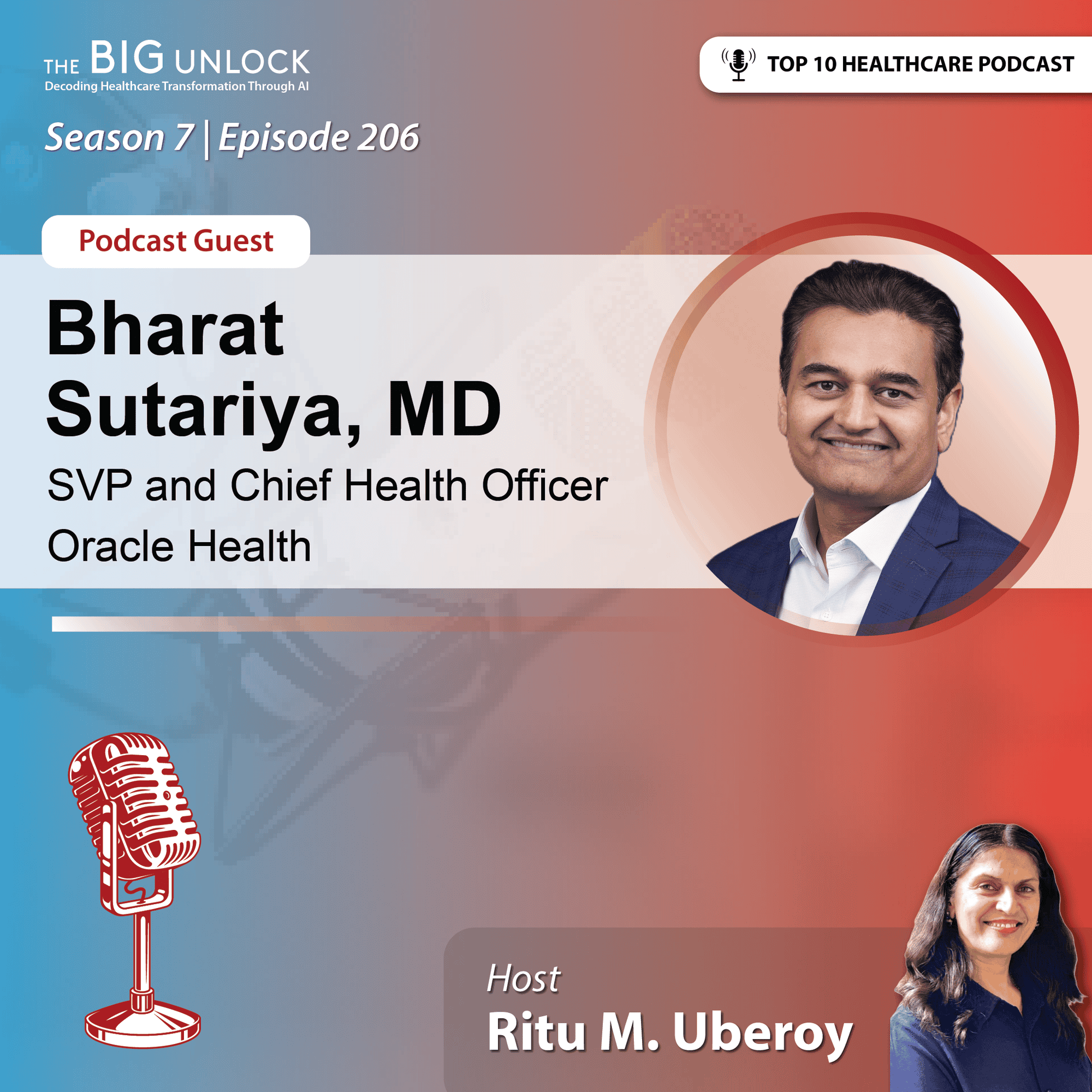
The Big Unlock · Bharat Sutariya, MD, Senior Vice President and Chief Health Officer, Oracle Health In this episode, Dr. Bharat Sutariya, Senior Vice...
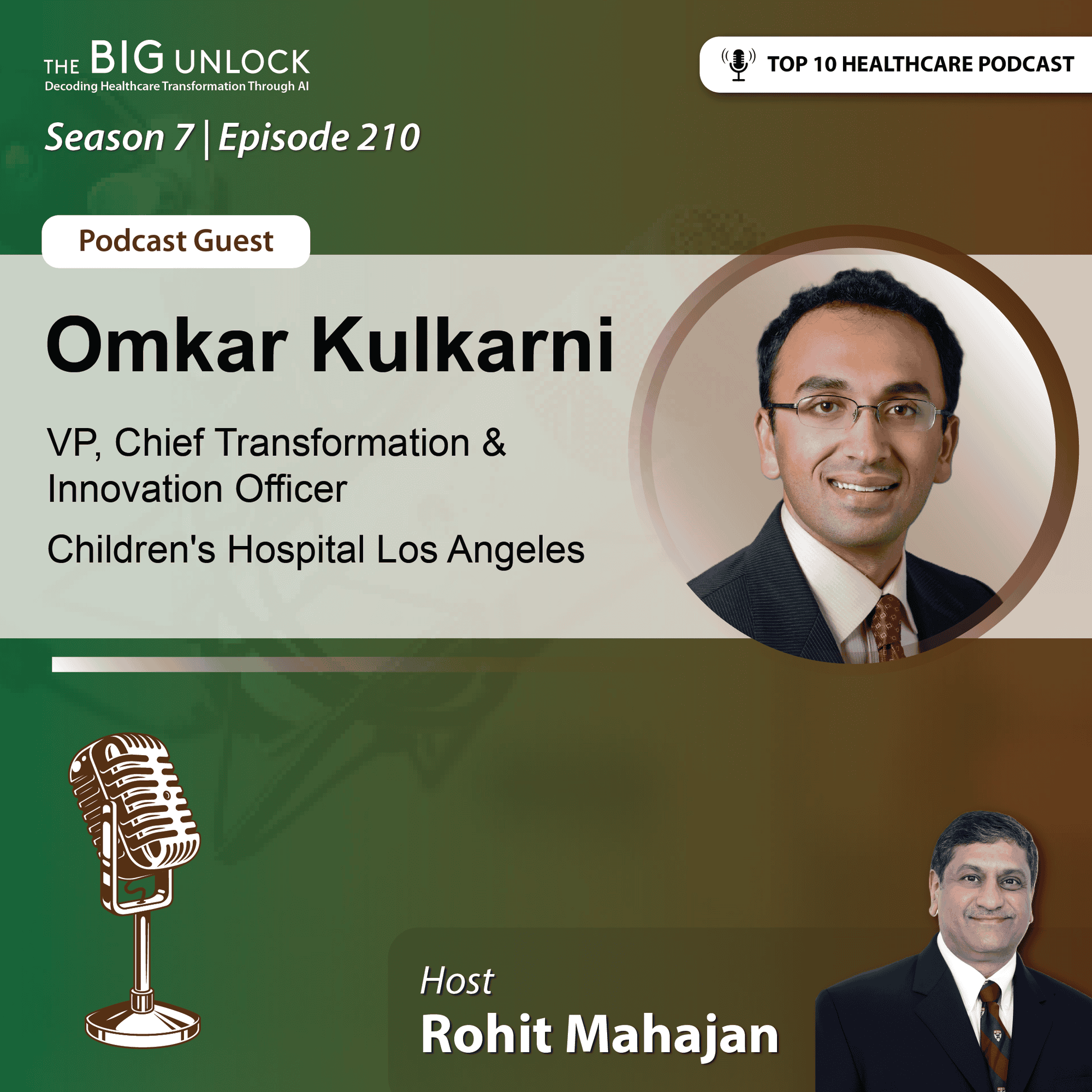
The Big Unlock · Omkar Kulkarni, VP, Chief Transformation & Innovation Officer, Children’s Hospital Los Angeles (CHLA) In this episode, Omkar Kulkarni, VP, Chief...